What is waqf? An Islamic endowment explained for communities
A clear guide to what waqf means in Islam: its history funding mosques, schools, and wells, how it differs from sadaqah jariyah and zakat, plus modern community endowment funds.
Last updated July 2026 by Fatih
Quick answer
A waqf is an Islamic endowment: an asset given permanently for a charitable purpose, where the asset is kept and only its income or use is given away. Historically waqf supported mosques, schools, hospitals, and wells. It is a specific form of sadaqah jariyah. Today many communities build a cash endowment fund whose investment returns cover a mosque's long-term costs.
Key takeaways
- Zakat is an obligatory annual payment; waqf is voluntary and meant to last indefinitely.
- Decide in writing who manages and invests a waqf fund before collecting for it.
- Givebear can collect contributions to a waqf fund, but it does not manage or invest the endowment.
Who this is for: Mosque and masjid boards exploring a permanent endowment to stabilize long-term operating costs; Islamic nonprofit and community fund leaders explaining waqf to donors and trustees; New Muslims and lifelong givers who want the precise difference between waqf, sadaqah jariyah, and zakat; Fundraising volunteers building a community waqf campaign and collecting contributions
Waqf (plural awqaf) is an Islamic endowment: an asset, often property, land, or capital, that is permanently dedicated so its benefit flows to a charitable purpose in perpetuity. The principal is held intact and protected from sale, gift, or inheritance, while the income or usufruct it generates is spent on the cause the founder names. In practice that has meant the building stays standing and the rent, harvest, or return keeps funding the work, generation after generation.
Historically, waqf was the backbone of Muslim civic life. Awqaf endowed and maintained mosques, madrasas and universities, libraries, public wells and fountains, hospitals, travelers' lodges, and even bakeries for the poor. A founder (the waqif) would sign a deed, appoint a trustee (mutawalli) to administer the asset, and designate beneficiaries. Because the endowment was irrevocable and self-sustaining, communities could rely on it long after the donor passed, which is exactly why scholars connect waqf so closely to the idea of ongoing reward.
Today most mosques build a waqf the other way round: many small gifts pooled into one community endowment, with the board or a trustee investing it and spending only the return. Givebear does not hold or invest endowments. It is how a masjid collects the gifts toward one, at the lobby kiosk, on the website, or as monthly gifts, into a fund kept apart from everything else.
Waqf vs sadaqah jariyah vs zakat
These three are related but distinct. Zakat is the obligatory annual almsgiving, calculated on qualifying wealth above the nisab threshold and distributed to specified categories of recipients. It is a duty with defined rules, not a permanent fund. Sadaqah jariyah is voluntary ongoing charity: any good deed that keeps benefiting people, such as a well or a printed Quran, generating reward that continues after the giver is gone.
Waqf is best understood as a structured, formalized form of sadaqah jariyah. It is voluntary like sadaqah, but it is institutionalized through a deed, a preserved principal, and a trustee, so the benefit endures indefinitely. A donor might pay zakat to meet an obligation, give sadaqah for an immediate need, and contribute to a waqf to leave a lasting institution. Many mosques run separate appeals for each so funds are never commingled.
How do modern community waqf funds work?
Today many mosques and Islamic charities pool many small gifts into a single community waqf fund rather than relying on one wealthy founder. The collected capital is invested or held by the organization or a qualified trustee, and the returns underwrite recurring costs like the imam's salary, utilities, or a scholarship, so the masjid is less dependent on month-to-month fundraising. This modern model keeps the classical principle intact: protect the principal, spend the yield.
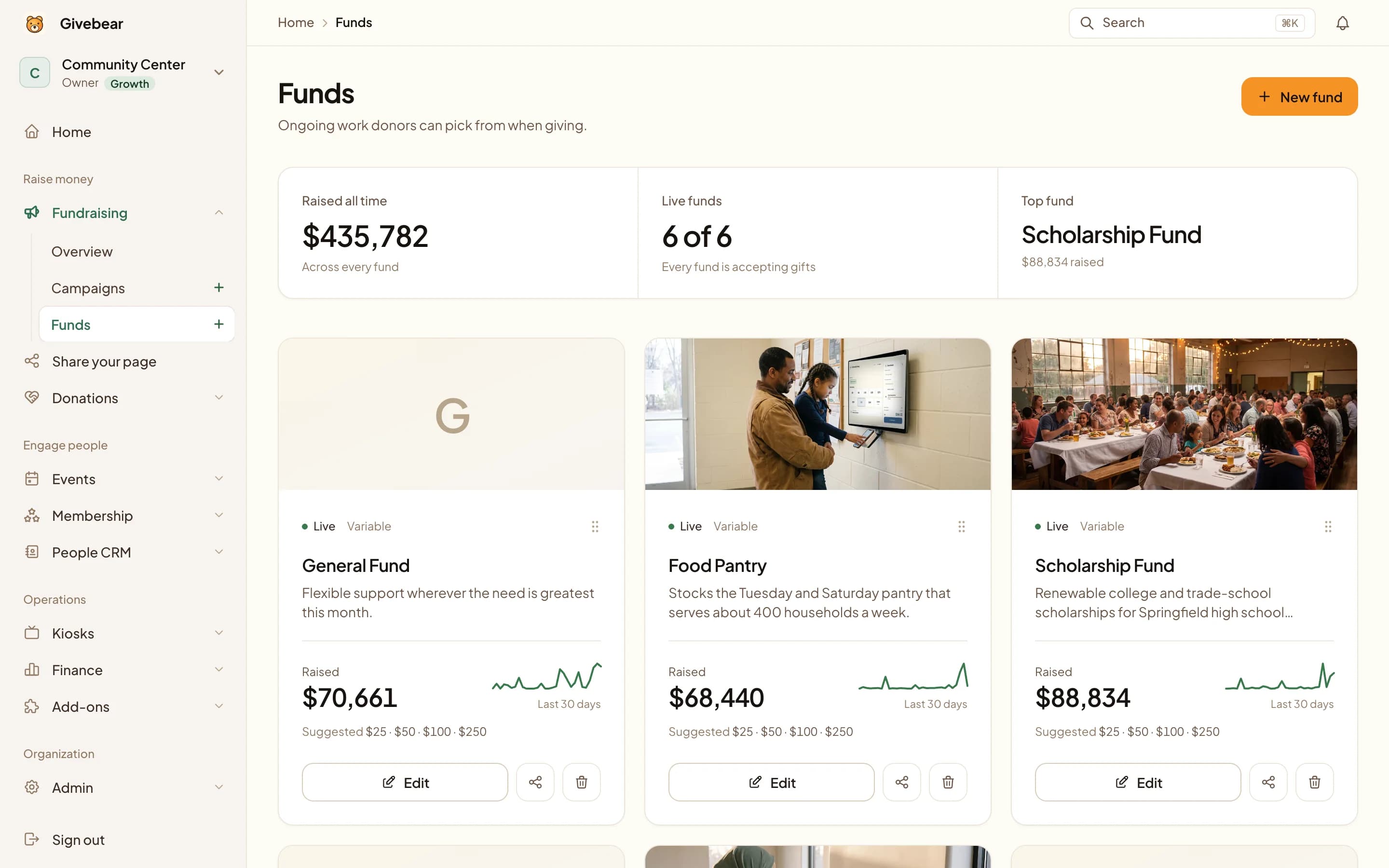
Standing up a community waqf still begins with raising the capital, and that is the part Givebear supports. Givebear does not manage, invest, or hold the endowment. It provides the collection side: a lobby kiosk, a website donate button, recurring gifts, and a restricted fund so every dollar earmarked for the endowment is reported separately. Your board, accountant, or appointed trustee handles the investment and governance side.
How do you launch a waqf campaign for your mosque?
A clear campaign turns an abstract concept into action. Name the fund, set a capital target, and explain plainly what the yield will sustain, then make giving easy on the channels your community already uses. A kiosk near the shoe racks reaches the Jumu'ah crowd, a website form reaches supporters who live farther away, and monthly gifts let modest donors build the endowment together over years.
Because contributions go into a dedicated restricted fund, the treasurer can see exactly how much has been raised toward the waqf versus general operations, and every donor receives a receipt. Report the fund's total to the community at least once a year so donors can see the endowment grow.
Practical use cases
- Educating a congregation on what a waqf is before launching an endowment appeal
- Collecting lump-sum and recurring contributions toward a community waqf capital campaign
- Routing waqf gifts into a clearly labeled, separately tracked restricted fund
- Issuing automatic tax receipts for every contribution made to the endowment campaign
Key features
- Restricted fund routing so waqf contributions stay tracked separately from general giving
- A Waqf button on the lobby kiosk next to Zakat and Sadaqah
- Monthly gifts so smaller donors can build the capital over years
- A donate button for the waqf campaign on the mosque website
- Email receipts and donor records for year-end acknowledgments
- A campaign goal and progress bar on the giving page
Common questions
What is waqf in simple terms?
What is the difference between waqf and sadaqah jariyah?
Is waqf the same as zakat?
Does Givebear manage or invest our waqf endowment?
How can a mosque collect contributions for a community waqf fund?
More in Glossary
See it with your own funds.
Book a 30-minute walkthrough. No slides and no hard sell: we set Givebear up around how your organization already gives.
- Your funds, set up the way your treasurer reports them
- Where a kiosk would go, and what it costs
- The reports your board will actually see
Rather set it up yourself? Start free
Loading available times
Or open the booking page