What is a digital collection plate? How churches replace the passed plate
A digital collection plate is any electronic giving channel that replaces the passed offering plate: giving kiosks, QR codes, text giving, and online forms.
Last updated July 2026 by Fatih
Quick answer
A digital collection plate is any electronic way to give the offering in place of, or alongside, the passed plate: a lobby giving kiosk, a QR code in the bulletin or on screen, text giving, or an online giving page. The gifts are the same tithes and offerings, made by card, phone, or bank transfer, and they can still be designated to funds and appear on year-end statements.
Key takeaways
- Match the channel to the moment: a QR code on screen during the offering, a kiosk at the door after the service, a giving page for midweek gifts.
- You can keep passing the plate; digital options reach people who carry no cash or checks.
- Record cash and check gifts in the same system so each giver's year-end statement is complete.
Who this is for: Church finance committee members who spend Monday mornings counting cash and matching envelopes to giving records; Executive pastors weighing whether visitors and younger members are giving less because they cannot, rather than because they will not; Church administrators who produce year-end giving statements and want kiosk and online gifts in one donor record; Worship and communications staff deciding how to present digital giving during the service without making the offering feel like a checkout
A digital collection plate is the set of electronic giving channels a church uses where the physical offering plate used to be the only option: a tap-to-give kiosk in the foyer, a QR code on the screen during announcements, a text-giving number, or the giving page linked from the bulletin. The term describes the function, not a single device. The plate was never the point; the moment of giving during worship was.
The shift is driven by what is in the pews. Most adults under fifty do not carry cash or a checkbook, so when the plate passes, the gift they intended to make has no way to happen. A church that offers a digital path recovers those gifts without changing the liturgy: the offering is still announced, still prayed over, and still part of the service. The mechanics simply moved to a card tap or a phone.
For the finance committee, the digital collection plate changes Monday morning more than Sunday morning. Counted cash, sealed envelopes, and two-person counting teams give way to transactions that arrive already attributed to a donor and a fund, with receipts sent automatically. The weekly deposit becomes a report to review rather than a pile to process.
What is a digital collection plate, and what does it replace?
Strictly defined, a digital collection plate is any giving channel that lets a congregant make an offering electronically during or around the worship gathering. Churches use the phrase because they think in terms of the plate: the real question is what to do now that the plate comes back light. The answer is rarely one device. Most churches assemble two or three channels: a kiosk for in-person card and wallet giving, a QR code or short link for phones in the pews, and a giving page for everyone else.
What it replaces is not generosity but friction. The passed plate assumed the giver carried their gift on paper. The digital plate assumes the giver carries a card or a phone, which is now the accurate assumption. What a digital channel recovers is the gift that previously had no way to happen: the visitor's first offering, the member who forgot cash, the family away on vacation.
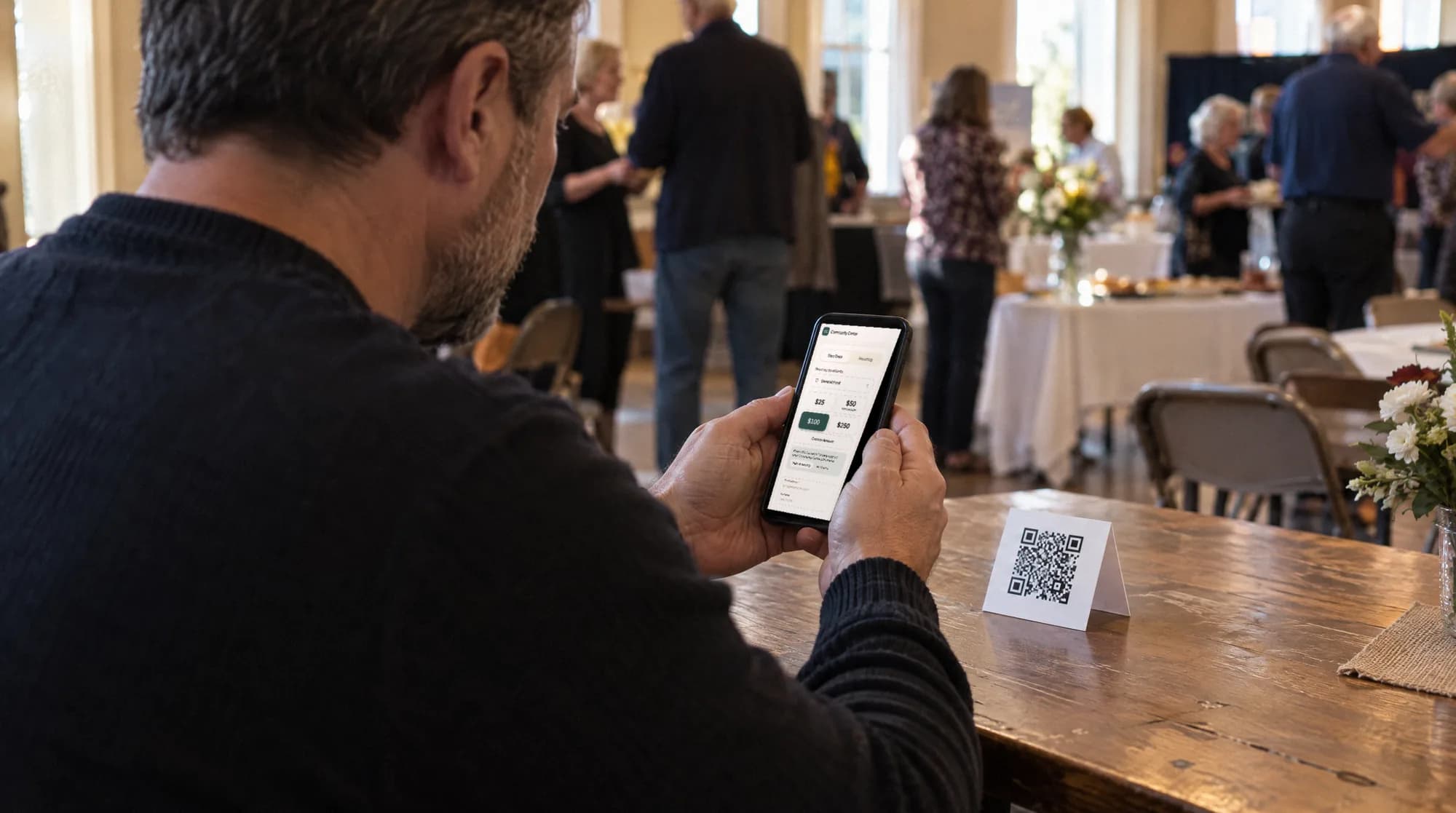
The four common channels and where each fits
The giving kiosk serves the moment of presence: a member walks past it in the foyer, taps a fund, taps an amount, taps a card. It is the closest analog to the plate because it happens in the building, in the flow of the gathering. Kiosks work best placed in the natural exit path with a default fund configured, so the common case is three taps.
QR codes serve the moment inside the service (some churches also use a text-to-give service, which Givebear does not provide). A code on the screen during the offering lets people respond immediately from the pew without anyone leaving their seat. The online giving page serves everything else: recurring tithes, gifts from home, year-end giving. The important property is not which channels a church picks but that they share one database, so the donor who taps the kiosk in January and gives online in June is one record with one year-end statement.
What does a digital collection plate cost?
Costs come in three layers: hardware, software, and per-transaction fees. Hardware is optional (a QR code costs nothing) but a dedicated kiosk runs $999 to $1,099 as a one-time purchase on Givebear, with no lease and no kiosk subscription. Software on Givebear starts at $0 per month with every channel included; paid plans add donor CRM capacity and email volume rather than gating features.
Per-transaction costs are where platforms differ most. Card processing (roughly 2.9% plus 30 cents online, 2.7% plus 5 cents in person) goes to the payment processor on every platform; reputable ones pass it through at cost. Platform fees vary from zero to several percent. On Givebear it is a flat platform fee from 1.9% to 5.9% depending on plan (one rate online, at kiosks, and on memberships), plus Stripe card processing at cost, with no setup fee and no monthly minimum, so the church knows the one rate up front, and donors can choose to cover the processing fee so the church receives the full gift.
How do you introduce digital giving without changing the offering?
The most common adoption fear is that screens and card readers will make the offering feel transactional. In practice, churches keep the moment intact by changing the mechanics, not the meaning: the offering is still announced and prayed over, the plate may still pass for those who give in cash, and the kiosk and QR code simply stand alongside it. Many churches keep printed giving cards in the pews so digital givers can still place something in the plate as a sign of participation.
Adoption follows visibility and repetition. A kiosk used well is mentioned from the front once ('if you prefer to give by card, the kiosk is in the foyer'), shown in the bulletin, and left to become routine. Older members often find a kiosk easier than a website: there is no account and no typing, just a fund, an amount, and a tap of the card they already carry.
Practical use cases
- Place a giving kiosk in the foyer so members and visitors can give by card or phone before or after the service, with funds for tithes, missions, and benevolence.
- Show a QR code on screen during the offering moment that opens the giving page with the week's fund preselected.
- Move weekly cash givers to recurring digital tithes, so giving continues through travel, weather, and summer attendance dips.
- Run special appeals (a benevolence need, a missions trip) as separate funds that appear on both the kiosk and the online page, with totals visible to staff in real time.
Key features
- Tap-to-give kiosks for the foyer with fund selection and preset amounts
- QR code campaigns that open the giving page with the right fund preselected
- Recurring tithes on weekly or monthly schedules with self-service management
- Automatic email receipts and year-end giving statements that combine all channels
- Fund designations (General, Missions, Benevolence, Building) on every channel
- Kiosk, online, and event gifts on the same donor record
Common questions
How does a digital collection plate work?
Will older congregants actually use digital giving?
What does a digital collection plate cost a church?
Can digital gifts still be designated to tithes, missions, or benevolence?
Do digital givers get year-end giving statements?
More in Glossary
See it with your own funds.
Book a 30-minute walkthrough. No slides and no hard sell: we set Givebear up around how your organization already gives.
- Your funds, set up the way your treasurer reports them
- Where a kiosk would go, and what it costs
- The reports your board will actually see
Rather set it up yourself? Start free
Loading available times
Or open the booking page